Product Description
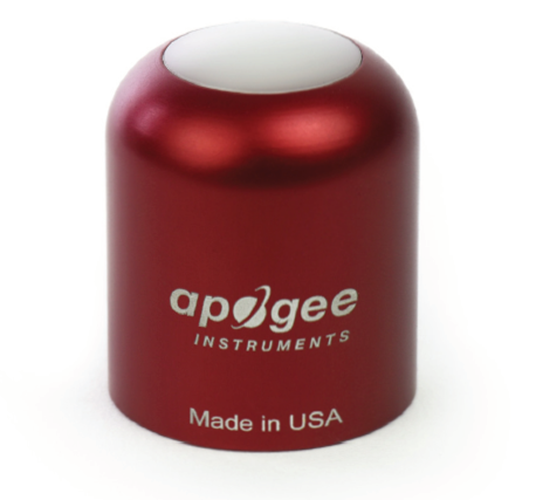
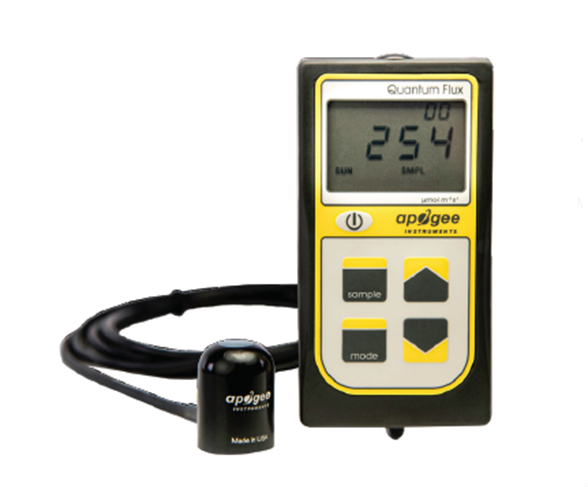
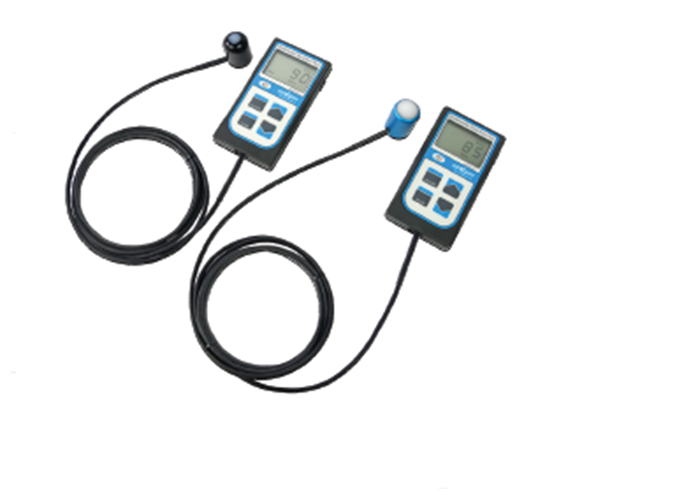
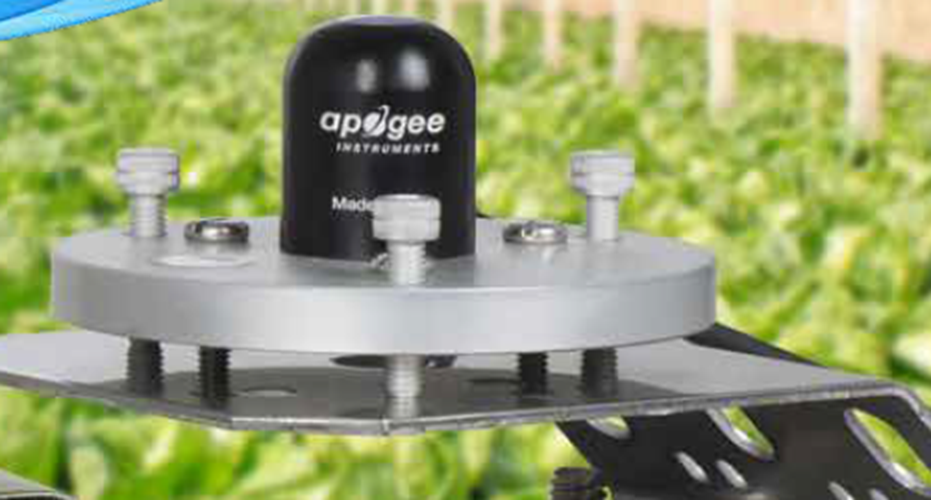
The new Apogee PAR-FAR sensor is a research-grade tool for measuring both the traditional PPFD photosynthetic photon flux and separately quantifying the photon flux of far-red photons (700-760 nm). The outputs include the traditional quantum flux, the far-red photon flux, and the far-red fraction (far-red photon flux density / sum of PPFD and far-red photon flux density). This sensor quantifies far-red photons, and for many applications it reduces the need for a more complex measurement with a spectroradiometer.
Powerful Dual-Range SensingEffectively monitor Photosynthetically Active Radiation (PAR) and Far Red Radiation (FAR) with quantum sensor technology. Designed to accurately differentiate and quantify light in both the 400-700 nm and 700-800 nm ranges, this sensor enables users to optimize lighting conditions for plant growth and research. With a resolution of 1 mol/m2/s and 5% accuracy, it provides precise, actionable data.
Reliable in Harsh EnvironmentsConstructed with UV stabilized polycarbonate and sealed to an IP65 rating, the PAR-FAR Sensor is engineered for durability in demanding indoor and outdoor environments. Its wide operating and storage temperature ranges, along with resistance to humidity up to 95% RH, ensure reliable performance for continuous operation in greenhouses, fields, or research laboratories.
Simple Integration and OperationInstallation is straightforward with a fixed mounting type and direct wired interface using a UV-resistant, shielded 2-meter cable with tinned leads. The sensor operates on standard 5 V DC input and outputs an analog signal, making it compatible with standard data acquisition systems. Factory calibration ensures immediate accuracy out-of-the-box, reducing setup time and maintenance costs.
FAQ's of PAR-FAR SENSORS:
Q: How does the PAR-FAR Sensor measure both PAR and FAR light intensity?
A: The sensor utilizes a high-sensitivity silicon photodiode capable of detecting wavelengths in the PAR range (400-700 nm) and FAR range (700-800 nm). It provides separate measurement outputs, allowing users to monitor both spectra that are critical for plant health and photosynthesis studies.
Q: What are the benefits of using a factory-calibrated photodiode sensor in horticulture?
A: Factory calibration ensures the sensor delivers accurate readings immediately upon installation, saving time and resources on-site. Accurate PAR and FAR measurements help optimize lighting strategies, promote healthy plant growth, and increase yields in controlled environments such as greenhouses.
Q: Where should the PAR-FAR Sensor be installed for optimal performance?
A: The sensor should be mounted in an area representing typical light exposure to crops or plants, avoiding obstructions or shaded locations. The cosine-corrected light direction ensures accurate readings regardless of sun or lamp angle, making it suitable for varied indoor and outdoor applications.
Q: What is the process for integrating the sensor into an existing monitoring system?
A: Integration is simple thanks to the included shielded, UV-resistant cable with tinned leads. Connect the analog output (current or voltage) to compatible data loggers or controllers, provide a 5 V DC power supply, and mount the sensor securely in the desired location using the fixed mounting type.
Q: What maintenance is required to keep the PAR-FAR Sensor functioning accurately?
A: Routine maintenance involves gently cleaning the sensor's optical surface to remove dust or debris that could interfere with light detection. The UV-stabilized enclosure minimizes the effects of aging, reducing the need for frequent recalibration.
Q: When is it necessary to recalibrate the sensor?
A: With its factory calibration and robust enclosure, recalibration intervals are typically long. However, for critical research or regulatory compliance, periodic calibration checks are recommended every 1-2 years or after exposure to extreme conditions.
Q: What distinguishes this sensor from standard PAR sensors?
A: Unlike standard PAR sensors, this model also quantifies FAR radiation (700-800 nm), which is increasingly recognized as important for plant development. Enhanced durability, UV resistance, and IP65 protection make it suitable for harsh environmental monitoring conditions.
 Call Us : +919412072697 07971891549( PIN:590)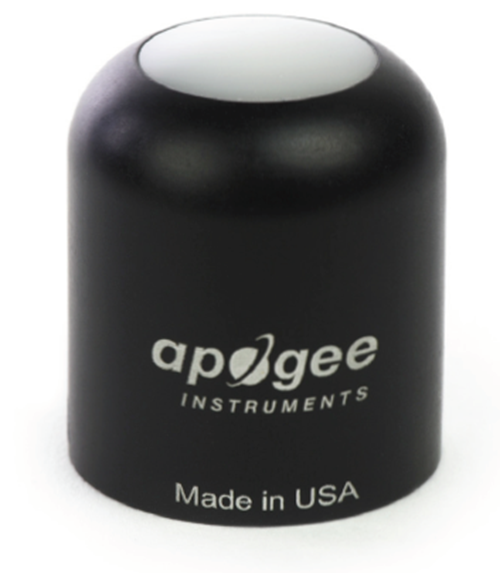







 Send Inquiry
 Send Inquiry
 Send SMS