Product Description
Apogee Instruments MI series infrared temperature meters are calibrated to the temperature of a custom blackbody cone held at multiple fixed temperatures over a range of radiometer detectorsensor body temperatures The temperature of the blackbody cone is measured with replicate precision thermistors thermally bonded to the cone surface The precision thermistors are calibrated for absolute temperature measurement against a platinum resistance thermometer PRT in a constant temperature bath The PRT calibration is directly traceable to the National Institute of Standards and Technology NIST
Reliable Solar Radiation MeasurementThe MI-200 Infrared Radiometer Meter ensures accurate assessment of solar radiation, backed by a 5% accuracy rate and broad measuring range. Its robust construction, fast sampling rate of 1 Hz, and spectral sensitivity make it ideal for both fieldwork and laboratory analysis, providing consistent results in extreme conditions from -40C up to 65C.
Simple Operation and PortabilityThis radiometer's lightweight (300 g) design and ergonomic 150 x 80 x 40 mm build guarantee convenient handling. With its portable and handheld mounting option and 2-meter cable, it allows flexibility in setup, making it hassle-free for professionals to conduct assessments wherever required.
FAQ's of INFRARED RADIOMETER METERS (MI-200):
Q: How do I use the MI-200 Infrared Radiometer Meter for solar radiation measurement?
A: To use the MI-200, simply connect the sensor to the main unit, position the thermopile detector towards the radiation source, and view instant readings on the digital LCD display. The portable design allows for easy handheld or temporary mounting during operation.
Q: What benefits does the MI-200 provide compared to other radiometers?
A: The MI-200 offers rapid response (less than 1 second), high portability, and broad spectral coverage (300 to 2800 nm). Its analog voltage data output enables smooth integration with additional logging or monitoring equipment, making it versatile for professional applications.
Q: When should calibration or maintenance be performed on this device?
A: Regular calibration is recommended annually or after significant impact events to maintain measurement accuracy. The MI-200's design minimizes routine maintenance, but periodic inspection of the detector lens and cable integrity is suggested.
Q: Where can the MI-200 Infrared Radiometer Meter be effectively used?
A: The MI-200 is suitable for various settings, including outdoor solar farms, laboratories, environmental monitoring stations, or educational institutions. Its temperature resilience and robust design support usage in challenging climates throughout the United States.
Q: What is the process for collecting data from the MI-200?
A: The radiometer samples data at 1 Hz and outputs an analog voltage signal. Users can observe real-time solar radiation on the digital LCD or connect the output to data acquisition systems for extended monitoring and analysis.
Q: How long does the 9V battery typically last under normal operating conditions?
A: While battery life depends on usage frequency and environmental conditions, the MI-200 is designed for energy efficiency. Under average conditions, a standard 9V battery will power the device for multiple working sessions before needing replacement.
 Call Us : +919412072697 07971891549( PIN:590)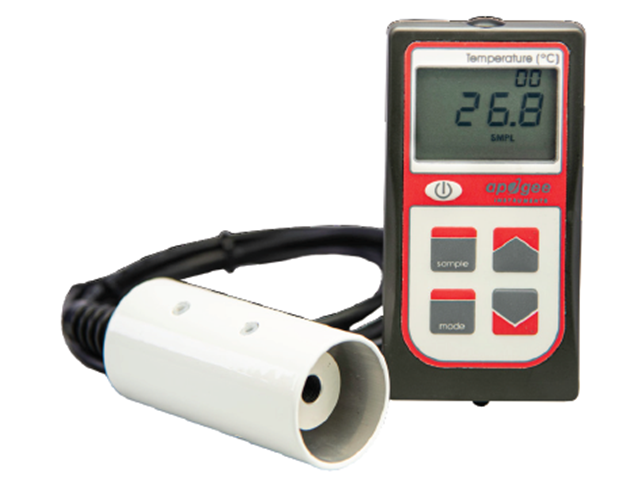







 Send Inquiry
 Send Inquiry
 Send SMS