Product Description
The new Apogee ePAR (extended photosynthetically active radiation) sensor was created to measure the wider 400-750 nm radiation range that cutting-edge research is showing to be photosynthetically active, beyond the traditional 400-700 nm range defined by McCree. Most of this transformative work to refine and define the ePAR range is being conducted by Dr. Shuyang Zhen and Dr. Bruce Bugbee at Utah State University.
Extended Range Light Measurement for Plant ResearchAPOGEE ePAR sensors capture the full extended PAR spectrum (400-750 nm), enabling enhanced evaluation of light environments for horticulture and agricultural research. Designed to measure both sunlight and electric grow lights, the sensor accurately assesses PPFD, conforming to ePAR standards. Its spectral and cosine response corrections ensure reliable data in variable lighting conditions.
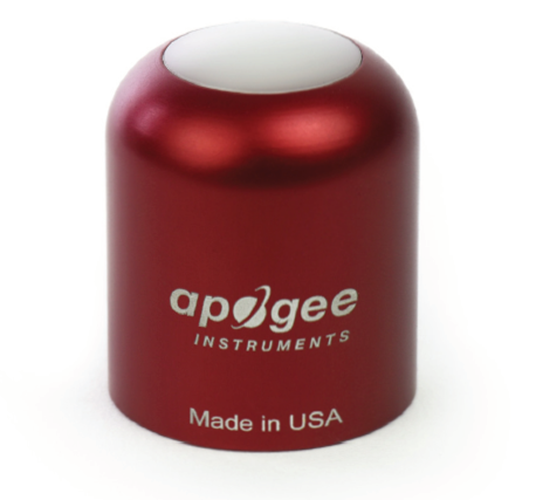
Durable Construction for Demanding ConditionsCrafted with anodized aluminum and a UV-stabilized acrylic optical diffuser, the ePAR sensor is built for longevity. The weatherproof, IP68-rated housing and 5-meter shielded cable ensure trouble-free deployment in greenhouses, outdoors, and indoor growth environments. The compact, lightweight design allows versatile mounting via leveling plate and mounting holes.
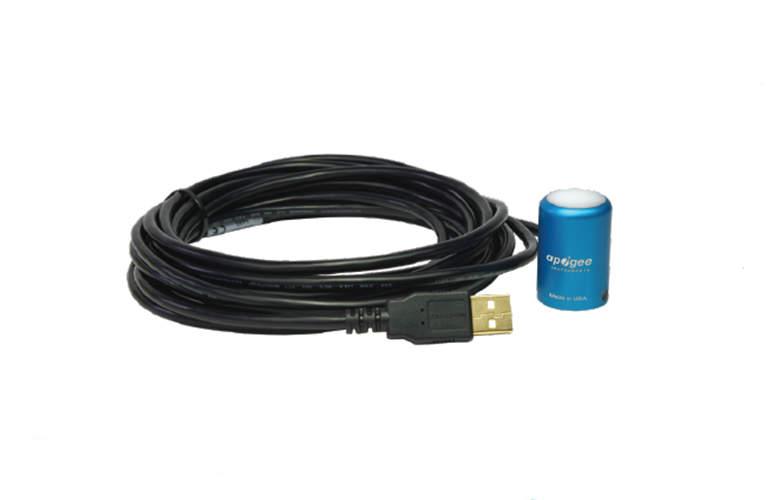
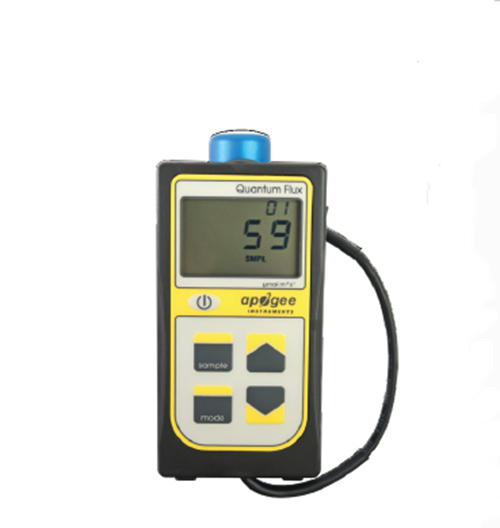
Flexible Integration and CalibrationThe ePAR sensor features a pigtail (bare wire) connector for straightforward wiring to compatible dataloggers or Apogee meters. Optional connectors are available for specific systems. Each unit is NIST-traceable calibrated and includes corrections for spectral and cosine response, guaranteeing high-accuracy measurements. It's a passive, self-powered sensor requiring no external power supply for signal output.
FAQ's of APOGEE ePAR SERIES (ePAR):
Q: How do I install the APOGEE ePAR sensor in my greenhouse or research setup?
A: The ePAR sensor can be mounted using the included leveling plate and mounting holes. Simply position it at the desired location, ensuring the bubble level is centered for proper orientation. The 5-meter shielded cable can be wired directly to a compatible datalogger or Apogee meter, or to custom connectors if needed.
Q: What applications is the ePAR sensor best suited for?
A: This sensor is ideal for measuring PPFD in a broad range of plant-related environments, including horticultural facilities, greenhouses, outdoor agricultural fields, and laboratory plant growth chambers. Its extended spectral range (400-750 nm) captures light relevant to contemporary plant lighting research and control.
Q: When should the ePAR sensor be recalibrated?
A: For the highest measurement accuracy, recalibration is recommended every two years, or sooner if the sensor has had prolonged exposure to harsh environments. Each sensor is NIST-traceable calibrated originally and supports recalibration by the manufacturer to maintain optimal performance.
Q: Where can I use the ePAR sensor with respect to compatibility and environments?
A: The ePAR sensor is compatible with Apogee meters and many third-party dataloggers, as well as modbus RTU variants depending on your model. Its IP68 waterproof rating allows it to function reliably outdoors, in greenhouses, or in laboratory environments exposed to moisture or dust.
Q: What process is used for correcting spectral and cosine response in the ePAR sensor?
A: Each ePAR sensor undergoes factory calibrations traceable to NIST standards, with spectral and cosine response corrections performed to ensure its readings accurately reflect the actual light environment encountered by plants. This minimizes measurement error from varying light sources and angles.
Q: How does using the ePAR sensor benefit my plant research or crop management?
A: By measuring PPFD across an enhanced PAR range, the sensor provides more complete data relevant to plant growth and development. Monitoring precise light levels allows you to optimize artificial lighting or sun exposure, improving yields and research outcomes through better-informed decisions.
 Call Us : +919412072697 07971891549( PIN:590)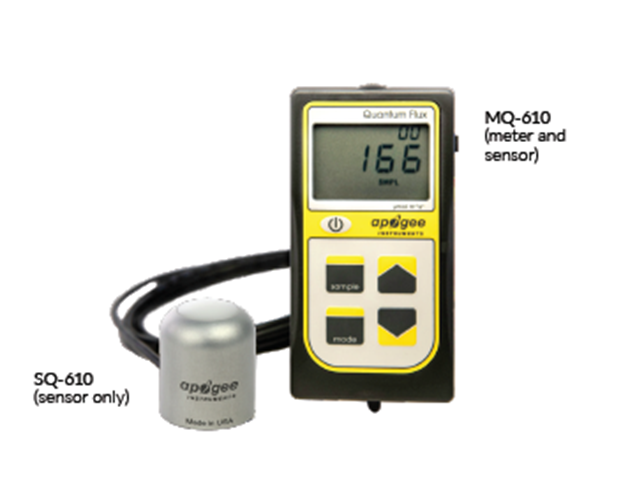







 Send Inquiry
 Send Inquiry
 Send SMS